Monday, October 31, 2016

Portfolio 5: Community Experience

I attended the Healing after abuse: victim recovery lecture that was given on campus. It was so interesting. There were two people that spoke, Chelsea and Stewart.
Chelsea focused on how to recover as an abuse victim. By looking at her, I never would have known that she was an abuse victim. This was hard for me to grasp because I realized how ignorant I am. I don't know what I had in mind about what abuse victims would be like, but Chelsea did not fit my picture. She's white, a college graduate, probably from some middle class family and she looks happy. It would never be my first guess that she had been abused. I was reminded that everyone has their own story and it is complex. There is no one story to a person. There are multiple perspectives and aspects of a person's life that are not covered by just one story like we talked about in class. Victims of abuse are not defined by their abuse. It was so impressive to hear Chelsea open up just a little about her past and how she has been able to move forward.
Stewart focused on what parents and loving supporters can do to help victims. This experience opened my eyes to what happens in the world. I have some friends that have been victims of abuse and it is hard to understand their healing process. Chelsea explained that you cannot let others tell you when you should be done grieving. Stewart talked about this too. He explained that supporters cannot become the interrogators. People typically do not like to talk about their suffering and if they are asked the same questions over and over, they won't want to explain things when it matters (like to law enforcement). I think this is good to remember as a teacher. If a student approaches you saying that they are being abused, you have no need to ask questions but just report it and let the authorities take over. We talked about in the class that teachers just need to believe. There is no need to question, just believe your students. Have faith in them. Your job is to remember that this event does not define this person and to thank them for sharing with you what they have shared.
I am grateful I attended this lecture. I learned a lot about any type of relationship. I learned how important it is to retain a solid understanding of your divine nature. It is also essential to help others remember their divine nature and that abuse does not happen because that person did something wrong or because they deserved it. Every person has infinite worth and potential and teachers can remind students of this every single day in a safe classroom environment. I also learned that there is no stereotype for abuse, it happens between all races, ethnicities, socioeconomic statuses, genders. It would be wrong to dismiss someone's suffering because they don't fall under a specific category of "people who get abused" which is typically believed to be those in the low socioeconomic category or racial minorities with machista husbands. To believe that their is only one type of people that get abused is like passive racism. We can unintentionally assume things about people and be completely wrong. Abuse can happen to anyone. This lecture ties into multicultural education because abuse happens in all places, to all races, genders, SES etc. We, as teachers need to be aware of what's going on but we have no right to be interrogators. The classroom is a safe space where some students are probably escaping their real world problems, abuse being one of them. This was a great experience to have. 

Monday, October 10, 2016

Chinese Oppression

Immigration to the United States from China began in the early 19th century. Immigrants came during the California gold rush and were often workers on the transcontinental railroad. Soon after Chinese immigrants settled in the US, oppression began. Chinese immigrants suffered racial discrimination on all levels. It got to be so bad that the US passed the Chinese Exclusion Act in 1882. This law prohibited immigration from China. This is the only law that has prevented immigration and naturalization based on race. Chinese immigrants were know as the "yellow peril". During this same time, many states had anti-miscegenation laws, which are laws that prevented Chinese men from marrying White women. However, the oppression decreased during WWII because China became an ally with the US. It wasn't until 1943 that Chinese immigration was allowed by law once again. In 1965, the Immigration and Nationality Act of 1965 was passed which lifted national origin quotas on immigration causing an increase in immigration from China. Today Chinese-Americans make up the largest group of Asian Americans (https://en.wikipedia.org/wiki/History_of_Chinese_Americans). Oppression towards Chinese Americans may not be as extreme as it once was but there are still traces of oppression today.
According to PEW social trends, Chinese Americans make up 1% of the total American population with over 3.3 million people. 44% of US-born Chinese can speak their native language, 59% of Chinese Americans are married, the median annual household income is $65,050, and 35% of Chinese Americans have a Bachelor's degree (http://www.pewsocialtrends.org/asianamericans-graphics/chinese/).
Today it is common for people to not distinguish different Asian ethnicities.
Many combine all Asians into the Asian category rather than distinguishing people as Chinese, Japanese, Indian, Filipino etc. This is a mild type of oppression. It is not uncommon for Chinese Americans to be asked where they are from, referring to what country their ancestors came from. Some are called communists and 25% of Americans believe that Chinese Americans would side with China instead of the US in a China-US dispute with 7% unsure of what would happen. There is the belief that "China is going to take over the world"and that Chinese workers are robbing Americans of jobs. There also remains the stereotype that Chinese Americans own stores and restaurants.
Here are some more stereotypes that are given of all Asians, not just Chinese. Pardon some of the content.


 So Chinese people are said to be smart, short, all look the same, be bad drivers, and not be good at sports among many other things. Like these videos say at the end, we have the power to uphold stereotypes, pass them on, or stop them. It appears to me that Chinese Americans have done a very good job at being resilient. This is the only minority group that has been literally excluded out of our country but they came back once that law was appealed and have proved to many that they are not aliens but very hard workers and are some of the most accomplished people in our country today.
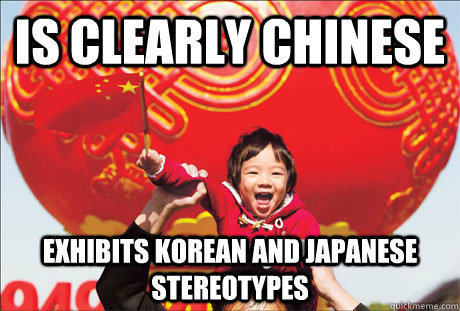
However, with this desire to be the best, many Chinese parents have very high expectations for their children. This may not necessarily be a negative consequence but US-born Chinese Americans often struggle to live up to their parents' high expectations. As this meme indicates, eliminating stereotypes is not the number one priority but rather to study hard and get good grades.


As you can see, the media often clumps all Asians together rather than distinguishing between different asian ethnicities. Older Chinese people do not think that Panda Express is awful but the younger generation, who most likely never lived in China, think Panda Express is definitely not comparable to real Chinese food. 

Doing this research, I realized that Chinese Americans are an oppressed group. They may not be as much as other groups but I often clump all Asians together and so I need to stop doing that. I also think it would be important to recognize the history of this group of people. They were treated very harshly and I think there are a lot of Americans that don't even know about the Chinese Exclusion Act of 1882. As a history teacher, I think this will be an important lesson for students to learn. This is one way I can help support anti-oppression efforts towards this group. I can also continue to be informed and keep up to date on Chinese oppression through current events. 

Here are some more portrayals of Chinese Americans in the media:


Just look at the girl in the background, she's disgusted.


"Hats of to you for not seeing race"


Once again, Asians are all combined.


Monday, September 26, 2016

Being the Other

For this assignment, I visited the Museum of Art for the first time. During one semester I did have a class there, but I never stopped to explore the museum. I went in and out of class. Entering this building makes me feel different. Art has never been a passion of mine and I have never understood people who love art and love to interpret what they see in paintings. This has never been my strong point so I avoid art museums. Basically, I feel like I don't belong and I feel judged by fellow museum goers. However, I decided now was a great opportunity to try to understand the art world. Sadly, this museum does not allow pictures to be taken and so I will not have visual artifacts. I will try to explain what I saw and how I felt during this trip to the museum. I expected to feel weird and very out of place. I expected to not know what to do or where to go and I thought I would have to ask a lot of stupid questions. I thought I was going to be surrounded by people with art books, I think they are called portfolios.
PC: Google Photos

Some of these fears were confirmed when I found out that the MoA does not open until 10 am. I got there at 9:30 and waited outside for a half hour until the doors opened. To my surprise, other people were waiting longer than I had been. I tried to fit in, and so I copied what they were doing which was homework. No one spoke to each other. Everyone was in their own little world. I chose this place because I have a prejudice against "artsy" people. I have come to realize this and am working to reject this prejudice. As I waited outside the MoA, I tried to think back to where this started and I believe it is because my dad never spoke highly of artists or art. I grew up with this and so "art people" were always different than I was. However, while I waited outside, I felt pretty normal because I like to study outside. I felt comfortable yet at the same time I felt that those waiting with me were thinking "oh man, this girl does not belong here".
Once the doors opened, I waited a few minutes before going inside and watched the other people go inside first. I followed one of them and thank goodness I did because I found out that you have to check in your backpack. I double checked at the desk and the security guard lady was very friendly and brought me to a locked closet full of backpacks. I was given a number and told not to take pictures. This made me feel uncomfortable. I don't like to give away my backpack. It's a part of my student identity now. I felt like I was untrustworthy. Did they think I was going to steal a painting? Why was my backpack not allowed with me while I toured the museum?
 PC: Google Photos

Not many people were there but it appeared that everyone had come to the museum by themselves. I thought that was interesting. I expected little cliques of people to visit the museum and quietly discuss each painting and art piece. So seeing individual people was comforting and eye opening. I like doing things by myself so I felt like I had a chance of no longer being "the other". This made me feel a little bit less like an outsider but I still felt like people were watching me the entire time I was there. It might just have been because I was watching them to see how they were behaving. I tried to mimic what they were doing. This meant I stopped in front of paintings and stared at them for minutes but I had no idea what I was supposed to be thinking about or analyzing. No one was talking to each other so I felt I could not violate the social norm and ask someone what they were thinking about. There goes my expectation of asking a ton of stupid questions, saved myself from embarrassment. I saw a girl sitting on one of the benches in one of the exhibits. She was just taking all of the artwork in. I found a different bench and did the same thing but I just felt like all of the portraits were staring at me and I fought the urge to get up. I stayed there for what felt like a long time but it turned out to only be five minutes.
 PC: Google Photos

Later, I found out that I missed the whole bottom floor of the museum. I thought I had seen everything but I missed an awesome exhibit on Christ. I went back a few weeks later for Art after Dark with some friends because I felt comfortable enough to go back. I felt like I had learned enough about the culture but understood that I had more to learn.
I learned a lot from this visit. I really did feel like an outsider and I found myself questioning what I was supposed to be doing nearly the entire time. However, it was not as extreme as I thought it would be. I thought there would be more conversations happening between people but I was pleasantly surprised to find out that the art world is fairly individualistic. Originally, I thought that this would not be similar to what students feel like in a foreign place but I was wrong. While in the MoA, some social norms were very obvious. For example, no one was speaking. I caught on to that very quickly. However, the rule about checking in your backpack was very foreign to me. This opened my eyes to the fact that students that don't quite fit in with the culture will be able to pick up on some social norms rather fast but others will take time and outside help. I think it will be beneficial to all students to go over the norms of the class on the first day of school so that everyone is on the same page. I thought that going over those things was always to help with classroom management but it also benefits kids that are "the other". I also learned that just because someone may seem confident does not mean that they are. When I walked into the MoA, I tried very hard to act like I knew what I was doing but I had to go to the information desk and ask the worker where I had to put my backpack. She gave me a look like "it's your first time here, isn't it" but she was very kind and helped me. Some students may be extremely shy and not ask any questions to clarify what is going on in the classroom. As a teacher, it will be important to develop solid relationships with each student so that they can feel comfortable enough to ask questions. It will also be important for teachers to recognize the efforts that students make to understand discourses other than their own native discourse. Just as I went back to the museum, many students will make efforts to become less of an "other" or students will make efforts to understand "the other". I think as a social studies teacher, there will be endless opportunities to inform students of events that are happening in the community or the world that help dissolve "otherness".  This assignment opened my eyes to being "the other" much more than I thought it would.

Monday, September 19, 2016

Culture

Taking engagement pictures is part of my culture. For some reason we take pictures to "show how in love we are". This is a social norm. If you don't take engagement pictures, lots of people get angry. 

In my culture, if two girls are seen wearing dresses or skirts together, people ask if they are sister missionaries.

A cultural event: going to a pumpkin patch during the month of October.

Language: puns. 

Food: Mexican food is a large part of my personal culture. I will eat tacos every single day.

Organization: In my culture, each day is scheduled whether or not I follow that schedule is a different story.
It is very common to have multiple tabs and programs open because my culture thrives on the false idea of "multitasking". 


Holiday: Valentine's Day is not complete without passing out Valentine's day cards to everyone you know with a cheesy poem on it.

My culture celebrates the "promotion" from 8th grade/middle school to 9th grade/high school. Education is valued in my culture.

My culture involves men and women working together in the home, especially taking the turkey out of the oven during Thanksgiving (another cultural event).
My culture believes in God and that families can be together forever. This belief is reflected in temples. 

My culture places high value on marriage. 

One of the cultural norms is to take selfies, but not just any selfie but one with the dog filter on Snapchat.

In my culture, technology is valued, children learn at a young age how to use different devices.
Language: My culture includes English and Spanish. You also can see the use of the thumbs up which is a gesture used often in my culture.

My culture believes in the idea of "don't worry, be happy."

From looking at my artifacts, my culture is very interesting. There is a lot of emphasis on the family unit. Holidays are a very important part of my culture as well. Humor is also a factor in the creation of this culture. I think that the organizational part of my culture will be helpful in the classroom because things will be organized and hopefully confusion will be avoided. Students will know when things are due and what is on the agenda for the day. My culture's passion for holidays may serve as a hinderance in the classroom because it would distract from classroom learning. Overall, the language of my culture will help in the classroom. There will be humor which creates a fun learning environment and it will not be an English-only atmosphere. Granted, it will not be a bilingual school so there will be some hinderance because assignments and books will not be in a different language but students could come up after class and ask questions. This has been a fun assignment because I looked through many of my pictures and could easily see how culturally-based my life is.

Thursday, September 1, 2016

Imagined Classroom

1. Pictures

(the desks would be lined up similar to this. Photo courtesy of www.classroomselect.com)


(This would be similar to what is on the back wall of the classroom. There would be lots of pictures of different places and people. Photo courtesy of www.puzzlewarehouse.com)
(This is the awesome globe from Target that I bought and it will be sitting on my desk.)
(I will have bins similar to these where students can pick up graded assignments and tests. Photo courtesy of www.havingclassinthird.com)
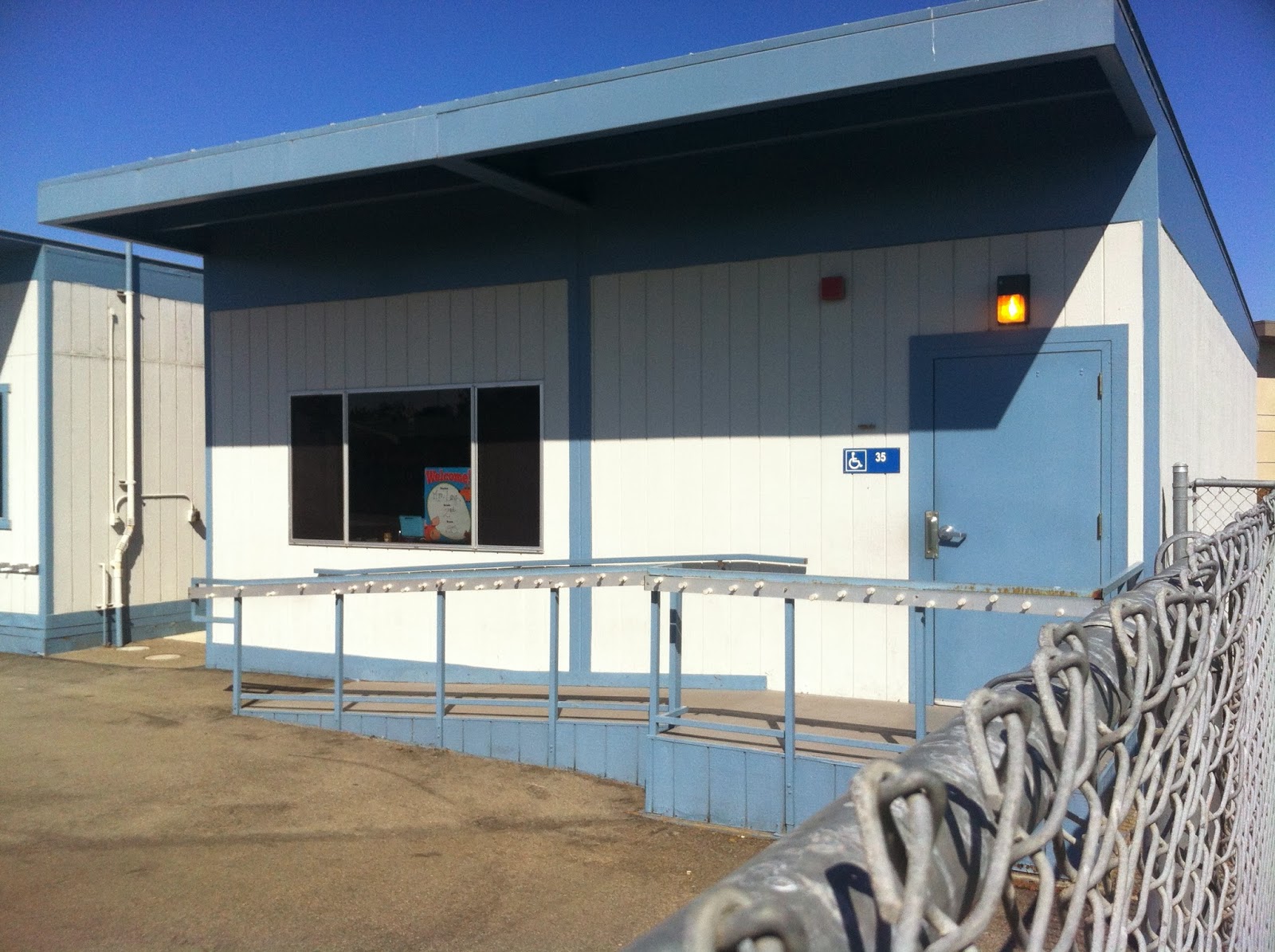
(This will be my classroom: a portable. Photo courtesy of www.imodularbuildings.com)

2. Classroom description
In my head I imagine my classroom being a portable because that is where all of the social studies classes were in my high school in California, however in Utah portable classrooms don't exist but I imagine I will end up in California so I will be in a portable. There will probably be 5 rows of 8-10 desks each all facing the whiteboard which will have a smartboard attached to it. The walls at the back of the classroom will be filled with pictures of people of differing cultures and different types of maps (physical, geographical, political, etc). Also at the back of the class will be tables with bins on top where students will turn in homework. There will be bins with file folders with each students' name on them according to the period where they will pick up graded work. There will also be a late bin and one bin for the work that gets turned in for the day. My desk will be at the front to left side and I will have my super awesome globe that I bought from Target as well as knick-knacks that I have collected from my travels. On the right side will be a table with the assignments for the day, any papers that students will need or assignments that will be started. The smartboard will be used often for the powerpoints that I will be using, but not to be used for whiteboard purposes. This is what I envision my classroom to look like.
3. Describe students
In my imagined classroom, I see diversity. My students will have different backgrounds, rich, poor, middle class. There will be immigrants (probably some of them illegal), maybe a refugee or two, white kids, black kids, latinos, asians, a little bit of everything. There will be jocks, nerds, theater people, kids struggling with their identity, and some normal kids. These kids will have various religious beliefs as well as political beliefs. All of these differences will add to class discussion as we discuss geography and why people are different or the same in different regions of the world. They will all have varying interests. Most of them will be eager to learn, some will like to be on their phones all the time (this will be frowned upon), some will be boy/girl crazy, and some will just sit and pretend like they hate the world.
4. Classroom policies
One of my coaches in high school called himself a "benevolent dictator" and I think that is kind of how I will run my classroom. I won't be unreasonable like most dictators, but when it comes down to it, my decisions are the ones that count. My discipline plan will consist of verbal warnings, separating students who are disruptive (I'll probably have some sort of time out desk where I will send students), and calling parents for extreme cases. I feel it is impossible to keep students from completely using their cell phones in class so instead of trying to take them away, I will ask students to google things when we are unsure about an answer so that they will be using their technology in a more productive way than snapchatting my awesome lesson. In my head, this is a great idea but it may be awful and so with time this rule could be modified. I will allow late work but students will only be allowed to earn up to 85% the second time around. I will also allow for test corrections but students will have to explain why they chose the answer they chose and look up the correct answer on their own. Students will walk into class, turn in any assignments that are due and pick up the assignments for the day on the various tables. I know there are a million other things that need policies but this is all I can come up with for now.
5. Typical lesson
I would be teaching geography. My typical lesson will be powerpoints. I would start with some sort of video and then we would have key terms and talk about whatever chapter of the textbook that we are on. I would then have some discussion questions that I will facilitate with the entire class or have them break into groups and discuss them together. Typically it will be asking who, what, where, when, why? This will be a theme throughout the whole year. I want students to understand that we are one world. I would hope that my students leave my classroom with a greater appreciation for differences in culture, religion, race, work etc.
6. What am I doing as a teacher?
I will be doing some direct instruction through the powerpoint as I describe key terms that students need to know in order to participate in the class discussions. There will be some inquiry based teaching with the 5 w questions. If we are having a class discussion I will have the students do the majority of the talking. When students are broken up into pairs and participating in cooperative learning, I will be walking around and checking for understanding. Oh, and jokes will be made here and there.
7. Students again, what are they doing during the lesson?
Students will be writing down on flashcards that they have the key terms and definitions given to them. Students will be expected to participate in class discussion, if they are not, they will be called on. As mentioned before, students will walk into class and pick up or drop off the various assignments for the day.
8. How do I assess student learning?
I imagine that I will have department-wide tests that will be given. However, for the day to day things classroom discussion will help me to gage where students are in their understanding of the material. I foresee map quizzes where students have to fill in country names into a blank map. I will know that they have learned when they start making connections on their own.